nokia 2780 flip phone manual
Nokia 2780 Flip Phone: A Comprehensive Manual Guide
Welcome! This manual details the Nokia 2780 Flip, a modern take on a classic. It guides users through setup, features, and troubleshooting,
helping navigate its simplicity after a smartphone transition.
The Nokia 2780 Flip represents a compelling return to simplicity in a world dominated by smartphones. This device isn’t about endless apps and constant connectivity; it’s about reliable communication, extended battery life, and a distraction-free experience. Many users are intentionally seeking this “dumb phone” functionality, desiring a break from the complexities of modern mobile technology.
Recent trends show a growing interest in these devices, as evidenced by individuals like those who recently switched from an iPhone 15 Pro Max to test its viability for daily use. The Nokia 2780 Flip appeals to those wanting core features – calls and texts – without the overwhelming demands of a smartphone. It’s a practical choice for individuals needing a secondary phone, or those simply wanting to disconnect.
This guide will provide a comprehensive overview of the Nokia 2780 Flip, covering everything from initial setup to advanced features like the FM radio and Bluetooth connectivity; We’ll address common questions and troubleshooting steps, ensuring you can fully utilize this device’s capabilities. It’s designed for both first-time flip phone users and those returning to this classic form factor.
Unboxing and Initial Setup
Upon opening the box, you’ll find the Nokia 2780 Flip handset, a Micro USB charging cable, and a basic user manual. Carefully remove the phone and inspect it for any physical damage. Before powering on, locate the SIM card tray – typically on the side or back of the device – and insert your SIM card using a SIM ejector tool (not always included). Ensure the SIM card is correctly oriented before inserting.
To power on the phone, press and hold the power button, usually located on the side. The device will boot up and prompt you to select your language, date, and time. Follow the on-screen instructions to complete these initial settings. You may also be asked to set a PIN code for security.
Next, charge the phone fully using the provided USB cable and a compatible power adapter. A full charge typically takes a few hours. While charging, the display will indicate the charging status. Once fully charged, your Nokia 2780 Flip is ready for basic operation. Refer to the following sections for detailed instructions on using its features.
Phone Overview: Key Features and Buttons
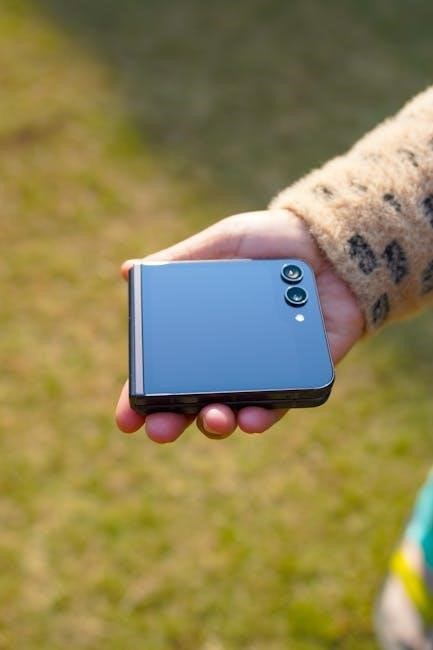
The Nokia 2780 Flip boasts a classic clamshell design, offering a compact and familiar form factor. Key features include 4G connectivity, a QVGA camera, FM radio, and essential apps like WhatsApp. The external display shows time, date, and incoming call/message notifications.
Key buttons include: the Power button (for turning the phone on/off), Volume Up/Down buttons (for adjusting volume), and the Navigation Key (for menu navigation). The alphanumeric keypad facilitates dialing and text input. A dedicated shortcut key may provide quick access to frequently used functions like the camera or messaging.
The hinge allows for easy opening and closing of the phone. Answering or ending calls can often be done by flipping the phone open or closed. The Micro USB port is used for charging and data transfer. The 3.5mm headphone jack allows for connecting wired headsets. Familiarize yourself with these components for optimal usage and a smooth user experience.
Understanding the Display and Navigation
The Nokia 2780 Flip features both an internal and external color display. The internal display, larger and more detailed, is used for most interactions. The external display provides at-a-glance information like time, date, caller ID, and incoming message previews.
Navigation relies primarily on the directional navigation key located beneath the internal display. Use the up, down, left, and right buttons to move through menus and options. The central select button confirms selections. Soft keys, typically labeled with context-sensitive functions, are positioned on either side of the navigation key.
Menu access is usually initiated by pressing the menu button. The interface is straightforward, designed for ease of use. Icons represent different applications and settings. Scrolling through lists is achieved by repeatedly pressing the up or down navigation keys. Understanding this simple navigation system is key to efficiently utilizing the phone’s features.
Making and Receiving Calls
To initiate a call on your Nokia 2780 Flip, begin by opening the phone. The display will illuminate, presenting the dial pad. Enter the desired phone number using the numeric keypad. Press the green call button to connect. Alternatively, access your contacts list via the menu button and select a contact to call.
Receiving calls is equally straightforward. When an incoming call arrives, the phone will ring and display the caller ID (if available). Open the phone to answer the call, or press the green call button to accept. To reject a call, press the red end/power button.
During a call, you can adjust the volume using the volume keys located on the side of the phone. The phone supports speakerphone functionality; activate it through the on-screen options. Call duration is displayed on the internal screen. Ending a call is done by pressing the red end/power button.

Contacts Management
Accessing the Contacts menu on your Nokia 2780 Flip is done through the main menu; Here, you can manage your phonebook entries efficiently. To add a new contact, select “New Contact” and enter the name and phone number using the keypad. You can also add additional details like a ringtone or note for each contact.
Editing existing contacts is simple. Select the contact you wish to modify, then choose the “Edit” option. Make the necessary changes to the name or number, and save the updated information. Deleting a contact is also straightforward; select the contact and choose the “Delete” option, confirming your choice when prompted.
The phone supports storing multiple contacts, and you can easily scroll through your phonebook using the navigation keys. Contacts are listed alphabetically for quick access. You can also assign speed dial numbers for frequently called contacts, enabling one-touch dialing.
Text Messaging (SMS)
To compose a new text message on your Nokia 2780 Flip, access the “Messages” application from the main menu and select “Write message.” Enter the recipient’s phone number or select a contact from your phonebook. Utilize the keypad to input your message, switching between alphanumeric input modes as needed.

The phone offers predictive text input to speed up typing, suggesting words as you enter characters. You can accept suggestions by pressing the corresponding number key. Once your message is complete, select “Send” to deliver it. You can also save messages to your inbox or create drafts for later use.
Reading received messages is equally simple. The phone will alert you to new messages with a notification; Access the “Inbox” within the Messages application to view your received texts. You can reply to messages directly from the inbox, forward them, or delete them as desired. Message storage capacity is limited, so regular deletion is recommended.
Camera Functionality and Usage
The Nokia 2780 Flip features a basic camera for capturing quick photos. To activate the camera, select the “Camera” application from the main menu. The interface is straightforward, displaying the viewfinder and limited options. The camera offers a single shooting mode, suitable for general snapshots.
To take a picture, simply press the capture button on the screen. The image will be saved to the phone’s internal storage. Image quality is modest, reflecting the phone’s simplicity and focus on core communication features. There are no advanced settings like zoom or white balance adjustments.
Accessing captured photos is done through the “Gallery” application. Here, you can view, delete, or share your images via Bluetooth. Storage space is limited, so frequent deletion of unwanted photos is advised. The camera is best suited for casual use and documenting simple moments, not for high-quality photography.
FM Radio Operation
The Nokia 2780 Flip includes an FM radio, providing access to local stations for entertainment. To begin, ensure headphones are connected to the phone’s 3.5mm jack – these act as the antenna. Launch the “FM Radio” application from the main menu. The phone will automatically scan for available stations.
The radio interface displays station frequency and name (if available). Use the navigation keys to tune to different frequencies or select from the automatically detected stations. You can save your favorite stations for quick access. Volume control is managed through the phone’s volume keys.
Radio functionality is dependent on signal strength and headphone connection quality. In areas with weak signals, reception may be poor. The radio operates in the background, allowing you to use other phone features while listening. Note that radio usage will consume battery power. Enjoy local broadcasts on the go with this convenient feature!
Basic Settings Configuration
Accessing settings on the Nokia 2780 Flip is straightforward. From the main menu, select “Settings” to begin customization. Here, you’ll find options to personalize your phone experience. Start with “Date & Time” to ensure accurate information, crucial for call logs and messaging timestamps.
Language settings allow you to choose your preferred language for the phone’s interface. “Sounds & Vibration” lets you adjust ringtone volume, notification sounds, and vibration intensity. Customize the “Display” settings to adjust brightness and timeout duration for optimal viewing and battery conservation.
Security settings include options for PIN code protection and auto-lock functionality, safeguarding your phone from unauthorized access. Explore “Call Settings” to manage call forwarding and barring. Remember to save any changes made within each settings menu. These basic configurations tailor the Nokia 2780 Flip to your individual needs and preferences.
Connectivity: Bluetooth and Headsets
Pairing a Bluetooth device with your Nokia 2780 Flip enables hands-free calling and audio streaming. Access the “Connectivity” menu, then select “Bluetooth.” Ensure your headset or device is in pairing mode – typically indicated by a flashing light. The phone will scan for available devices.
Select your device from the list displayed on the phone’s screen. You may be prompted to enter a PIN code (usually “0000” if required). Once paired, the device will appear in your paired devices list. You can connect and disconnect devices from this menu.
Using a Bluetooth headset allows for convenient, hands-free calls. Incoming calls will automatically route through the headset when connected; Adjust the volume using the phone’s volume keys or the headset’s controls; Remember to keep the headset charged for optimal performance. Bluetooth offers a convenient way to enhance your calling experience with the Nokia 2780 Flip.
Battery Management and Charging
Optimizing battery life on your Nokia 2780 Flip is simple. Reduce screen brightness, shorten the auto-screen timeout duration, and disable Bluetooth when not in use. Avoid leaving the phone in extremely hot or cold environments, as this can degrade battery performance.
Charging the phone requires the included USB cable and a compatible power adapter. Connect the cable to the micro-USB port on the bottom of the phone. A charging indicator will appear on the display. Full charging typically takes approximately 2-3 hours, depending on the current battery level and adapter used.
Avoid overcharging the battery, as this can reduce its lifespan. Once fully charged, disconnect the phone from the charger. The Nokia 2780 Flip utilizes a removable battery, allowing for replacement if needed. Always use a genuine Nokia battery or a certified compatible replacement to ensure optimal performance and safety.
Troubleshooting Common Issues
Phone not powering on: Ensure the battery is charged. Try a different charger and cable. If still unresponsive, remove and reinsert the battery. A factory reset (if possible) might resolve deeper software issues, but will erase all data.
No network signal: Verify your SIM card is correctly inserted. Check network coverage in your area. Restart the phone. Ensure airplane mode is disabled. Contact your mobile carrier to confirm account status and network outages.
Sound issues: Check the volume level. Ensure the phone isn’t muted. Test with headphones to isolate the problem. For no sound after a reset (as reported by some users with similar Nokia models), a software glitch may require contacting support.
Frozen screen: Attempt a soft reset by removing and reinserting the battery. If that fails, a more advanced reset might be necessary, potentially requiring a service center visit.
Network and SIM Card Information
SIM Card Installation: The Nokia 2780 Flip utilizes a standard Mini-SIM card. Power off the phone before inserting or removing the SIM. Locate the SIM card tray (refer to the ‘Phone Overview’ section). Gently insert the SIM card into the tray, ensuring the gold contacts face down and align with the tray’s shape.
Network Compatibility: This phone supports 2G and 4G LTE networks. Compatibility varies by carrier and region. Confirm your carrier supports the phone’s frequency bands before use. Roaming charges may apply when using the phone abroad; check with your carrier for details.
Network Settings: The phone automatically detects network settings. However, you can manually configure APN (Access Point Name) settings under ‘Settings > Network & Connectivity’. Incorrect APN settings can prevent data connectivity.
Dual SIM Capability: The Nokia 2780 Flip supports single SIM functionality. Ensure the SIM card is activated with your chosen carrier before inserting it into the device.
Safety and Warranty Information
Important Safety Precautions: Please read these guidelines to ensure safe and responsible use. Avoid using the phone while driving; prioritize road safety. Keep the device away from water and extreme temperatures. Do not attempt to disassemble the phone; this voids the warranty and poses a safety risk.
Radio Frequency Exposure: This device meets applicable radio frequency exposure limits. Maintain a safe distance from the phone during operation. Specific Absorption Rate (SAR) information can be found in the regulatory section of the phone’s menu.
Warranty Details: The Nokia 2780 Flip comes with a standard limited warranty against defects in materials and workmanship for a period of one year from the date of purchase. This warranty does not cover damage caused by misuse, accidents, or unauthorized modifications.
Warranty Claim Process: To initiate a warranty claim, contact Nokia customer support with proof of purchase. Retain your original sales receipt as evidence of the purchase date. Further details regarding the warranty terms and conditions are available on the Nokia website.






Leave a Comment